What are the legal frameworks?
How are resource extraction projects approved and monitored?
Latest Update: November 2025
EITI Standard:
Interesting Facts
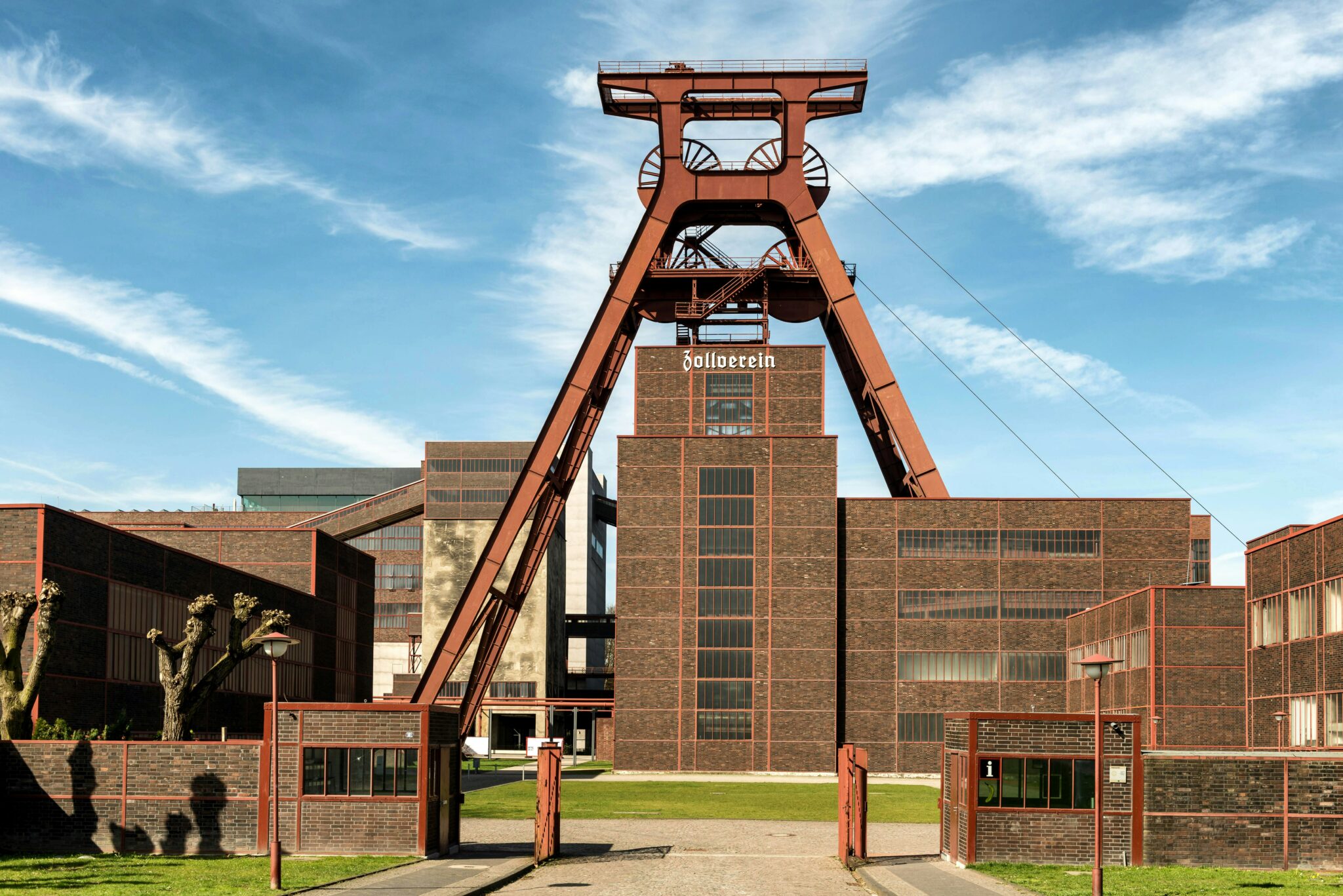
In Germany, the conditions under which natural resources are extracted are generally not negotiated directly between the extracting companies and the state authorities. The conditions for the exploration and extraction of mineral resources are laid down in generally applicable laws and are implemented by the relevant authorities. The procedures for the approval and supervision of raw material extraction projects in Germany are not regulated in the same way for all mineral resources. They vary depending on the natural resource type and its legal anchoring in the federal and state governments.
Mining licences
Mining licenses are the basis for exploring and extracting free-to-mine mineral resources. They are applied for in the form of a permit, license or proprietary mining rights. Under Section 22 BBergG, both the transfer of an existing mining licence and the participation of third parties in it are only permitted with the consent of the competent mining authority.
We can distinguish between three types of mining licenses:
Permit
The permit is a mining license that grants the right to explore free-to-mine natural resources in a particular licensed mining site. The permit is limited to a maximum of five years and can be extended by three years (see Section 16(4) BBergG). There is a legal entitlement to the granting of a permit, provided there are no grounds for refusal. The permit may be refused if, for example, no work programme is available or the specified period is not taken into account in the planning. The grounds for refusal are listed exhaustively in Section 11 BBergG. If for reasons for which the permit holder is responsible, exploration is not started within one year, the permit must be revoked (Section 18 BBergG).
License
The license is a mining license granting the right to explore and extract free-to-mine mineral resources in a particular licensed mining site. The license is granted for “a period of time appropriate for the completion of the extraction in the individual case”. Fifty years may only be exceeded if this is necessary in view of the investments normally required for the extraction. An extension is possible (see Section 16(5) BBergG). There is a legal entitlement to the granting of a license, provided there are no grounds for refusal.
The license can be refused if, for example, it cannot be proven that the mineral resources can be extracted according to their location and nature (see Section 12 BBergG). A license shall be revoked after three years in cases where extraction is not commenced or is interrupted, unless there are grounds for obstruction pursuant to Section 18(3) sentence 2 BBergG. The grounds for refusal are listed exhaustively in Section 12 BBergG (incl. reference to Section 11 BBergG).
Proprietary mining rights
Proprietary mining rights are a special form of mining license for the extraction of free-to-mine mineral resources. They comprise the rights and obligations associated with the granting of a license, but also allow mortgage lending and the registration of easements. The proprietary mining rights are entered in the land register with the name and address of the applicant and details of the field. The proprietary mining rights are granted for “a period of time appropriate for the completion of the extraction in the individual case”. Fifty years may only be exceeded if this is necessary in view of the investments normally required for the extraction. An extension is possible (see Section 16(5) BBergG). If the regular extraction of natural resources has been interrupted for more than ten years, the proprietary mining rights must be revoked in certain cases (if Section 18(4) sentence 1 BBergG is applicable). In order to apply for proprietary mining rights, the applicant must already hold a license for the specified field. In addition, proprietary mining rights may be denied if, for example, it cannot be demonstrated that an economic extraction of the natural resources is to be expected (see Section 13 BBergG).
Special case: Mining license according to old law
In addition to the above-mentioned authorisations (permit, license or proprietary mining rights), the authorisation forms also include authorisations derived from old law, which are referred to as old rights. These are mining licenses granted before the current Federal Mining Act of 1982 entered into force. They include, for example, the opencast lignite mining industry in the Rhenish mining area or the salt mining leasehold rights (Salzabbaugerechtigkeiten) and old crude oil contracts in Lower Saxony. They remain valid under current law (see Section 149(1) sentence 1 BBergG) if they have been notified to the mining authorities and confirmed by the mining inspection authorities within a transitional period of three years after the BBergG 1982 came into force. In contrast to authorisations under the new BBergG, authorisations under the old law are neither limited in time nor do mine site or extraction royalties have to be paid. In practice, these old rights related/relate in particular to stone and lignite, salts and hydrocarbons. However, the approval of an operating plan is also required for the extraction of mineral resources under the old law.
Special case: special requirements on the territory of the former GDR
The GDR’s mining law system differentiated between nationally owned and other mineral resources. The former essentially comprised the mineral resources that were free-to-mine and privately owned according to German federal law; the latter were classified as property. The Lending Ordinance of 15 August 1990 created the basis for converting mining licences for nationally owned mineral resources into free-to-mine natural resources, thereby transferring them into the German federal legal system. The mining licenses transferred in this way are considered proprietary mining rights; they are unlimited in time and exempt from mine site and extraction royalties. In contrast to the former federal territory, the old rights that are still valid in the new federal states extend to the deposits explored up to 1990 and also comprise privately-owned natural resources.
Overview of old mining laws, mining laws in the GDR and modern mining laws
You can find an overview of all mining rights at Data on mining authorizations.
Approval of an operating plan
Exploration, extraction and processing operations that are subject to the BBergG are generally only established, operated and closed on the basis of plans (operating plans) that have been drawn up by the company and approved by the competent authority. The approval of such operating plans is subject to conditions (conditions of approval).
They refer, among other things, to operational safety and occupational health and safety, protection of the surface and the avoidance of harmful effects, protection of the deposit and precautionary measures for the proper reutilisation of the areas used for raw material extraction. The BBergG distinguishes between different types of operating plans, such as framework operating plans, main operating plans, final operating plans and special operating plans. For more information see Managing human intervention in nature and landscape.
The operating plans generally comprise:
- A presentation of the scope of the project
- A presentation of the technical implementation of the project
- The duration of the project
- Evidence that the conditions of approval have been met
The operation of a mine is typically dynamic in nature due to the ongoing adaptation to the deposit, as the specific location of the mining operation changes as the mining of lignite or salt progresses and extends to areas of the deposit that have not yet been mined (this is not the case with borehole mining, such as deep geothermal energy, oil and natural gas). This mode of operation also entails specific risks for employees and third parties. Because of this peculiarity, continuous monitoring of the operation is required, staggered according to time intervals. As a general rule, the main operating plan should not exceed two years and should be approved by the competent authority. The permanent coordination between the company and the competent authority is intended to ensure intensive state control of the mining companies, while at the same time ensuring flexibility in planning.
Against the background of the phase-out of lignite-based electricity generation (see Effects of the Energy Transition), the Federal Mining Act (Bundesberggesetz, BBergG) was amended. The duration of main operating plans for lignite opencast mines can be extended beyond two years1 in order to increase the planning certainty. This rule may also apply to other mining projects, provided that adequate administrative control is maintained.
In addition, procedures have been streamlined: Actions against authorisations for open-cast lignite mines will in future be decided directly by the Higher Administrative Courts (FN: Section 48 (1) no. 14/VwGO [Rules of the administrative courts]).2
In addition to the approval procedures, contractual agreements between companies and government agencies are also made in some cases. However, as explained above, these are not the rule but the exception. Where private-law agreements are relevant for extractive companies in Germany, this is listed and explained in Payment flows of the extractive sector.
Permit under water law
If a mining project involves the use of a body of water, a permit under water law is required in addition to the approvals under mining law (see § 8 in conjunction with § 9 WHG (Water Resources Act)2. Such uses of water bodies include, in particular:
- the removal and discharge of water from surface waters,
- the impoundment and lowering of surface waters,
- the removal of solid substances from surface waters, where this has an impact on the water characteristics,
- the introduction of substances into water bodies,
- the removal, pumping or conveying to the surface and discharge of groundwater.
Unless there is one of the aforementioned activities, the following are also deemed to be uses
- the impoundment, lowering and diversion of groundwater by installations designed or suitable for this purpose,
- measures which are suitable to cause permanent or not insignificant adverse changes in water quality,
- the fracturing of rocks under hydraulic pressure for the exploration or extraction of natural gas, petroleum or geothermal energy, including associated deep drilling,
- the underground storage of reservoir water resulting from the measures referred to in point 3 or from other measures for the exploration or extraction of natural gas or petroleum.
Where an operating plan under mining law provides for the use of water bodies, the mining authority shall decide on the granting of the permit. The same applies to the revocation of a permit. The decisions of the mining authority must be taken in agreement with the competent water authority.
Permits under water law must be entered in a so-called water register (section 87 WHG), which is publicly accessible. The procedural regulations for this are governed by state law.
Environmental impact assessment
Similar to other projects with significant environmental impacts, environmental impact assessments are also required for projects under mining law. The Ordinance on the Environmental Impact Assessment of Mining Projects (EIA-P Mining) regulates when an environmental impact assessment (EIA) or a preliminary assessment of the individual case is required. In this connection, it depends, for example, on the size of the project, measured by the extraction volume or the required extraction site or on the question whether Natura 2000 areas are affected, whether an EIA is required for the mining project. An example is contained in the following table. In addition, an EIA is mandatory for all mining projects to the extent that they are included in the list of projects with mandatory EIA according to Section 1 of the Ordinance on the Environmental Impact Assessment of Mining Projects (EIA O Mining), which was adopted on the basis of Section 57c BBergG.
If an EIA is necessary, a planning approval procedure with participation of members of the public, whose interests are affected by the project must be carried out in accordance with mining law. Within the scope of the involvement of the public, the plans for the extraction of mineral resources and a report on the likely environmental impact of the project are made available to the public in the municipalities concerned for a period of one month in accordance with Section 16 UVPG (Act on EIA). The public display will be announced in advance in accordance with Section 73 VwVfG (Administrative Procedure Act). The competent authority shall set a reasonable deadline for the objections of the public concerned after the end of the public display period. The authorities concerned will be consulted at the same time as the public exhibition. Comments from the authorities and associations as well as objections from citizens are discussed jointly with the company and the approval authority at a discussion meeting (Section 73 VwVfG). A decision on the objections is made by the competent authority (in this case the mining authorities of the federal states) and set out in the planning approval decision. The planning approval under mining law is also a binding decision that is not characterised by planning considerations and discretionary powers. In addition, it not only integrates decisions of other authorities, but in accordance with Section 57a (5) BBergG also applies to subsequent operational plans. Any information to be published on environmental impact assessments of mining projects is available on the environmental portals of the state and federal governments.3,4
In contrast, no planning approval procedure is carried out for operating plan procedures without an EIA. Accordingly, the responsibility of other authorities to decide on authorisations, permits, licenses, etc. remains unaffected in these cases. So to the extent necessary for the concrete implementation of a natural resource project, further authorisations, permits and licenses etc. are to be obtained from the respective competent authorities. These can include building permits, forest conversion permits, authorisations under the Immission Control Act5, permits under explosives law or the granting of exemptions from prohibitions under nature and landscape law.6
Public access to environmental information and “Authorisation Notices”
According to environmental information law, every person has free access to environmental information from bodies obliged to provide information. To this end, the federal and state governments have enacted regulations that implement the requirements of international law (“first pillar” of the Aarhus Convention) and the European Union’s Environmental Information Directive 2003/4/EC. A distinction must be made between the Environmental Information Act (UIG), which regulates access to environmental information at federal level, and the statutory provisions of the federal states on access to environmental information, which apply to agencies in the federal states that are obliged to provide information. The Federal Freedom of Information Act (IFG) applies to other official information held by federal authorities.
Environmental information (see Section 2 III UIG and corresponding regulations in the environmental information laws of the federal states) includes both data on the condition of environmental elements such as air, atmosphere, water, soil, landscape and natural habitats (No. 1) and information on factors such as noise, energy, substances or radiation (No. 2) as well as measures or activities that affect the above-mentioned environmental elements or factors or aim to protect the environment (No. 3). According to Section 3(1) of the Environmental Information Act (UIG), all public authorities as well as certain private authorities, in so far as they perform public tasks or public services, are obliged to provide access to environmental information. Anyone wishing to receive environmental information can submit an application to the competent authority in accordance with Section 4 of the UIG. The request should specify the information to which the request relates. Fees may apply for processing.
The right to access information may be restricted in order to protect certain interests that are exhaustively listed in the UIG (Sections 8, 9 UIG). Among other things, these include the protection of personal data, copyrights or trade and business secrets. An appeal may be lodged against the rejection of a request for access to information.7
Environmental information on emissions from individual natural resources extraction facilities (and other industries) is also made available to the public on request. This information includes authorisations, permits or licenses granted to the company to impact the environment. Approval decisions that have a significant impact on the environment must be published independently by the competent authorities (see Section 10 II UIG).8 Some federal states use extensive “environmental portals” to publish authorisation notices and general environmental information.9 At federal and state level, there are central internet portals that contain information about the environmental impact assessments described above (EIA portal, cf. Section 20 UVPG). These portals can also be used for the dissemination of environmental information (see the legal clarification for the scope of the UIG in Section 10 III UIG).10
Example of an authorisation decision
Citizens can obtain specific information on the environmental impacts approved by the authorities from the authorisation notices. The following is an excerpt from the notice “Water law permit (…) for the discharge of saline wastewater from the Neuhof-Ellers and Werra plants into the Werra” for the company K+S Minerals and Agriculture GmbH in Philippsthal.[1] The company mines potash-containing salts in the plants and discharges salt water into the Werra river as part of the mining process. The authorisation notice from the Kassel Regional Council states the amount of saline wastewater that is permitted to be discharged. In addition, extensive aspects are addressed, such as the participation of the public and of associations or the impact on protected assets such as “water”, “human health”, “animals, plants and biodiversity” and “landscape”.
[Extract]
“[…] I. Decision 1 Permit
The applicant is […] granted the permit under water law to discharge saline wastewater from the Werra and Neuhof-Ellers plants into the Werra via the discharge points at the Hattorf site near Flst. 46/2 (Werra) […] and the point of discharge at the Wintershall site near Flst. 379/3 (Werra) […] and via trench 3 (waste water from compensation and safety measures), limited until 31/12/2021 with the following content:
1.1 Discharge quantity
A maximum total of 6.7 million m3/a of saline wastewater from the production and operation of the salt piles and saline water from the Neuhof-Ellers and Werra mining operations, the Hattorf/Wintershall mining operation, as well as from the diffuse inflows/sources of the Neuhof-Ellers plant and the saline surface water from the Neuhof-Ellers plant site may be discharged into the Werra.
No quantity restriction applies to the discharge of saline groundwater from the safety and compensation measures that are or will be required due to the stockpiling of solid residues, but the following load restriction applies.
2. Loads
The annual load of the discharged mineralisation (K, Mg, Na, Cl, SO4) of groundwater from the safety and compensation measures that are or will be required due to the stockpiling of solid residues must not exceed 28,500 tonnes per year”
Sources
3 Federal EIA Portal, EIA Network – Environmental impact assessments of the German states, for example EIA Portal Lower Saxony
4 A total of 63 environmental impact assessments can be identified for 2024.
5 Regarding the Federal Immission Control Act (BImSchG), also refer to the glossary.
6 A separate authorisation under water law may be included in the administrative act of the mining authority.
7 The above information and text passages originate from the Federal Ministry for the Environment
8 Details specifying where such information is accessible or can be found is sufficient.
9 Example: Environmental portal North Rhine-Westphalia; Lower Saxony; Thuringia. An overview of the existing environmental portals can be found using the interactive map for D-EITI reporting.
10 An example of an approval notice can be downloaded and inspected at d-eiti.de